
Searching the Columbus Court Docket
Columbus has no municipal-court database of its own. The way to reach a Columbus court record is the North Carolina eCourts Portal. Smart Search there opens the Case Summary, also called the Register of Actions. If a Columbus citation or notice gives you a state case number, use that first. Otherwise, search by party name. Before trusting a Columbus match, check the result carefully. Confirm the Polk location, the parties, and the case type.
- Read the Columbus citation, summons, or order and retain its number and first court date.
- Select Smart Search and use a full state case number, or a party name when no number is available.
- Review the Columbus case's Case Events, Hearings, Dispositions, and Financial Information when those fields are present.
- Run Search Hearings for a current Polk location and time instead of assuming an earlier Columbus notice remains current.
- Use the Polk Clerk for a public-terminal search, a file inspection request, a copy, or a setting that still needs confirmation.
Smart Search works by party. There is no charge-only route. A city name alone will not stand in for a case identifier, so weigh any Columbus result against the notice and the county listed on it.
Columbus Docket at the County Seat
As Polk County's seat, Columbus stands apart from Tryon and Saluda. The state courthouse sits here. So does the county clerk. Even so, the court system is state run, not a Town of Columbus court. The corrected 2020 Census put Columbus at 999 residents. That small scale adds no separate Columbus docket; it simply puts the countywide court records in one city.
Living at the county seat cuts travel to the clerk. It changes nothing about jurisdiction. A traffic or misdemeanor matter normally runs through Polk District Court. Felonies, and civil actions over $25,000, follow the proper Superior Court path. Even when Columbus Police or town enforcement starts the contact, the file remains a Polk case. The case does not move.
Columbus Municipal Court Basics
Columbus has no Municipal Court. There is no town judge, no separate Columbus court calendar, and no town portal for paying a citation. The Town's code and municipal papers are not a docket search. Columbus Police may issue a charge. But the case then travels the Polk District Court and Clerk route. This matters. Columbus holds both town offices and the county courthouse. The local government desk cannot substitute for the judicial record path. Check a court date in Portal, through Search Hearings, or with the Polk Clerk. Payment instructions come from the Polk Clerk, not a Columbus municipal court.
Columbus Court File at Courthouse Square
The Polk County Courthouse sits at One Courthouse Square, Columbus, NC 28722. So does the Polk County Clerk of Superior Court. The official courthouse page posts the hours. They run Monday through Friday, 8:00 a.m. to 5:00 p.m. The page also covers parking around the square, wheelchair access, and an elevator. When a Columbus docket result leaves questions a screen cannot settle, this building is the fallback.
Phone the Clerk at (828) 894-4900. Staff there can help with public-terminal searching and inspection of nonconfidential files. They also handle court copies, certification, and case questions that remain open. District Court judges can be reached at (828) 694-4225. Superior Court judges sit at (828) 694-4230. Those numbers belong to the state court structure, not a city court office.
For the view of the municipal setting, the Town of Columbus official site shows the town itself. It is not a court record source.
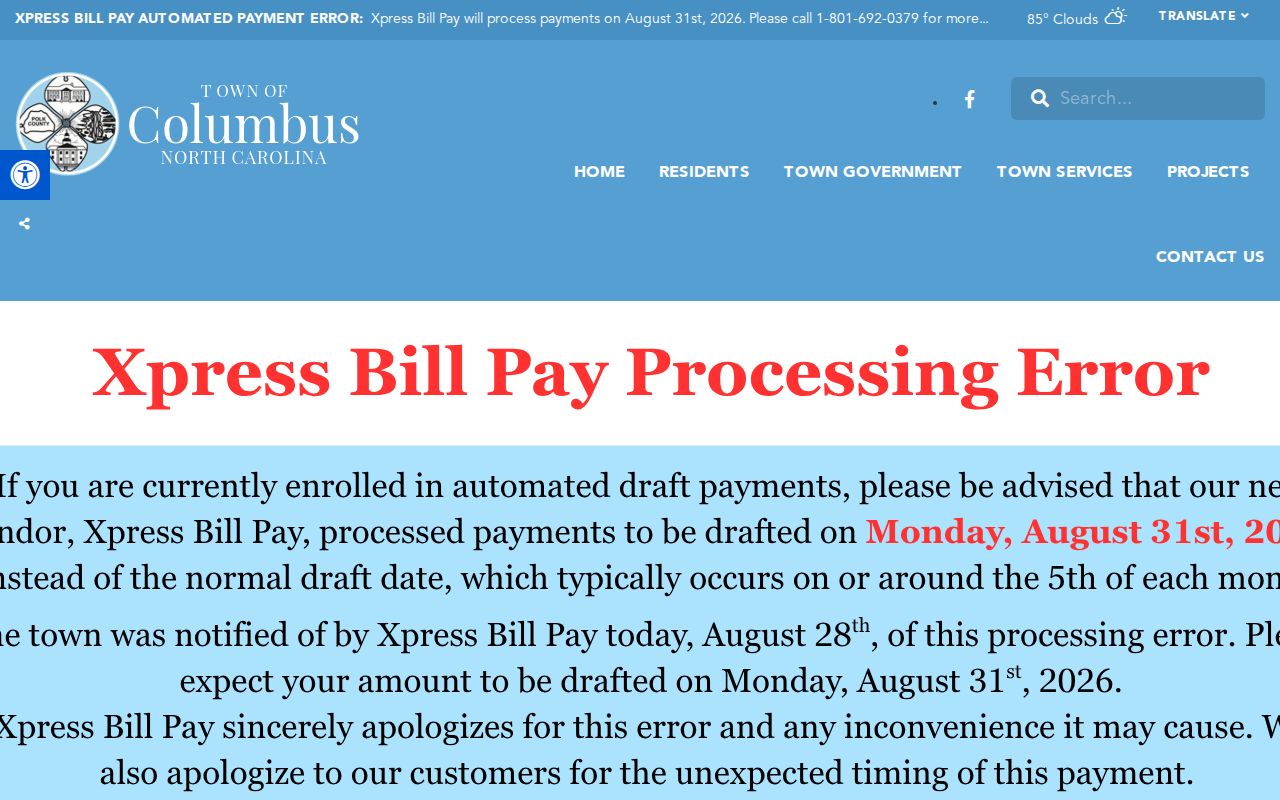
In Columbus, the town and the courthouse sit side by side but serve different roles. Municipal administration belongs to the Town, while court records belong with the Clerk.
Court Dates and Settings in Columbus
Check a Columbus court date through more than one Polk channel. Smart Search may display the Hearings section of the Case Summary. Search Hearings scans the current calendar. It searches by case number, party, business, attorney, judicial officer, or courtroom. The Polk local administrative schedules add session context. Still, a quarterly calendar cannot prove that a specific Columbus case is still set.
| Date | Compare the citation date with the most recent Case Event or Search Hearings entry for the Columbus case. |
|---|---|
| Time | Search Hearings provides a current time where available; it does not classify the setting as virtual or in person. |
| Location | Confirm the Columbus courthouse or other Polk location shown for the individual case. |
| Judicial Officer | Search Hearings can use a judicial-officer search, but the public sources do not fix a Columbus municipal judge. |
| Setting history | Read Case Events chronologically because a continuance may leave an earlier Columbus notice visible. |
A calendar list does not guarantee call order. Courts and judges differ on how they call matters. When a Columbus appearance is near, confirm the current setting with the proper court division and the Clerk.
Columbus Docket Through Three Channels
Portal, calendar, and clerk counter each answer a different Columbus question. Smart Search covers case history. Search Hearings covers the current time and place. For calendar context, the Polk Local Administrative Schedules lay out District Court, civil, and criminal sessions. The clerk counter and public terminal handle records needing inspection. They also serve cases that will not resolve online.
| Columbus need | Best channel | What it answers |
|---|---|---|
| Find one court case | Smart Search | Public Case Summary, Case Events, and available case fields. |
| Check a present setting | Search Hearings | Current location and time for a Columbus-connected Polk case. |
| Inspect or certify a record | Polk Clerk | Public terminal, file access, copies, and court certification. |
Using all three channels avoids a common Columbus mistake. It keeps you from treating a session calendar as your personal court-date notice, or a Portal image as a clerk-certified record.
Traffic Tickets in Columbus
A ticket written by Columbus Police does not go to a town court. It becomes a Polk District Court case. Plug the citation number or a party name into Smart Search. Then check Search Hearings for the current court date. Waivers, reductions, dismissals, and payment options exist for some matters. Eligibility comes from the citation itself and the official court services. So treat any third-party claim with care. A town code library will not search a case or take a payment.
For full Polk payment details and missed-date consequences, see the county's traffic ticket record page. Paying a Columbus fine does not excuse a required appearance. And do not assume every balance can clear through Portal. The case may not show up. The amount may not either. Then the Clerk is the person to call.
Columbus Court Docket, Historic Courthouse
The Polk County Courthouse sits in Columbus. It holds a spot in the state's historic inventory. Columbus won the courthouse site when Polk was re-created in 1855. That comes from the state's architectural history. It does not create a separate municipal court inside the old building.
Access has moved on, though. Polk joined Track 5 on July 22, 2024. Public case lookup then shifted to Portal once the older systems retired. So the historic courthouse still houses the Clerk and the in-person records. The Columbus case search itself now starts online through the statewide system.
Where Columbus Cases Go
Town enforcement in Columbus adds no extra court layer. A Columbus Police matter or a local ordinance case filed in Polk lands in Polk District Court, with the Clerk keeping the record. Felonies take the Superior Court path. So do civil actions over $25,000. Appeals follow North Carolina's structure, which may mean a fresh trial in Superior Court or an appellate docket, depending on the law that applies.
Docket flow: Columbus Police or local enforcement → Polk District Court Case Summary → Polk Clerk court file at One Courthouse Square → Superior Court Division of the General Court of Justice where required.
None of this changes the search order for a Columbus case. Portal comes first. The Clerk comes next when a record needs confirmation, inspection, or certification. Some cases are not clearly tied to Columbus enforcement. The countywide Polk docket search is then the next reference point.
Columbus Courtroom Device Rule
A District 42 Superior Court order on mobile devices, filed in February 2026, governs the Columbus courthouse. Visitors in the public gallery may not talk or text. Still photos and video require the presiding judge's consent. The rule covers attending a Columbus hearing in person. It says nothing about remote case lookup.
That matters if Search Hearings shows a Columbus setting you plan to attend. Bring the case details. Confirm the courtroom and time through the court's own channels. And follow the local rule once inside. A public Portal result grants no permission to record a hearing.
Columbus Court Record Access Rules
An ordinary, nonconfidential Polk case tied to Columbus is findable in the public Portal, checkable in Search Hearings, and viewable through the Clerk's terminal or file process. The Portal Case Summary helps with research. It is not the official court record. For a clerk-made copy or a certificate, the Columbus courthouse clerk path is the one to use.
Some records stay closed online. Juvenile files are confidential. Domestic-violence information faces special remote-display limits. Sealed and expunged matters never surface in an ordinary Portal search. A missing name result, in short, proves nothing about whether an underlying event occurred.
Key Rules:
G.S. 7A-109 assigns court recordkeeping to clerks and permits public inspection unless law restricts access.
G.S. 132-6 requires reasonable public-record inspection and copy access subject to lawful fees.
G.S. 7B-3000 makes juvenile court records confidential except as law or a court order permits.
Columbus Clerk Copy for Court Records
A clerk copy earns its keep in three situations. Maybe the Portal record runs thin. Maybe you need to inspect a public file. Or an official certification is required for a Columbus case. Bring the case number, or enough party and date detail for the Clerk to find the file. The public terminal aids court research. It cannot turn a screen result into a certificate under seal.
The Clerk keeps the file at One Courthouse Square. Under G.S. 7A-308, the certificate-under-seal fee is $3, while other copy charges vary with the request. Ask which copy is available and whether certification is needed before ordering a Columbus court record.
Note: A certified clerk copy is an official court product, unlike a public Portal view or a Columbus Police incident record.